
The details matter.
Because your trust does.
You want to feel proud of the website you share and clear about the work behind it. We connect quality with careful decisions, an understandable review process and an honest record of what is ready.

Quality should be
something you can ask about.
You should be able to ask why a page is arranged a certain way, where a button takes someone or what has actually been reviewed. A reassuring answer is specific enough to understand.
These are the working standards we bring to an agreed engagement. The review scope, responsibilities and evidence are defined for the actual project rather than assumed from a general statement.
A clear purpose and truthful content
We connect a page to the audience need it serves. The explanation, headings and next step need to make sense together. Business facts, credentials and outcomes require real support and the right owner review.
Routes that deliver what they suggest
A useful link has an accurate label and a relevant destination. Reviewing a click includes the content people arrive at, not merely whether an address opens.
A considered reading and interaction experience
We consider information order, readable type, contrast, keyboard use and clear control labels. Review requirements are agreed for the project, with observed issues recorded rather than hidden behind a claim of perfection.
A thoughtful implementation
Content structure, image preparation, loading behaviour and appropriate search foundations inform build decisions. Measured results and technical checks need their own evidence and context.
Understandable ownership and handover
The delivered work, access, editing responsibilities and remaining decisions need a clear account. Ongoing maintenance or support arrangements are agreed explicitly.

Review the experience
people need to use.
Someone may be reading quickly, using a keyboard or trying to understand an unfamiliar service. Good decisions about structure, language and interaction help the website make sense in those situations.
Accessibility, performance and different screen contexts belong in a considered review plan. The scope should name what will be checked, how findings will be handled and which requirements need specialist assessment.
A standard is a responsibility to examine the work, not a substitute for evidence.
Make the issue clear.
Then make the response clear.
Open an example to see what a useful review record contains. These are illustrative situations, not findings from your website or a live automated assessment.
A button opens the wrong kind of destination.
Respond: Correct the route or prepare the destination content so it fulfils the purpose of the link.
Verify: Click the route again and review the content it opens. A working address alone is not proof of a useful destination.
A strong claim has no confirmed support.
Respond: Obtain real support, qualify the wording or remove the claim. Do not invent a credential, endorsement or result.
Verify: Confirm the revised public wording and its approved factual basis.
A control is difficult to use with a keyboard.
Respond: Review the control semantics, labels and keyboard behaviour within the agreed scope.
Verify: Repeat the relevant action and record what was tested. Specialist accessibility evaluation may require a separate scope.
A review has known limits or remaining items.
Respond: Agree the owner, next action and whether it affects the planned release.
Verify: Keep the record current and avoid presenting untested work as a completed check.
A useful review record connects the observation, the agreed action and the relevant verification.
Notice it.
Resolve it.
Check the result.
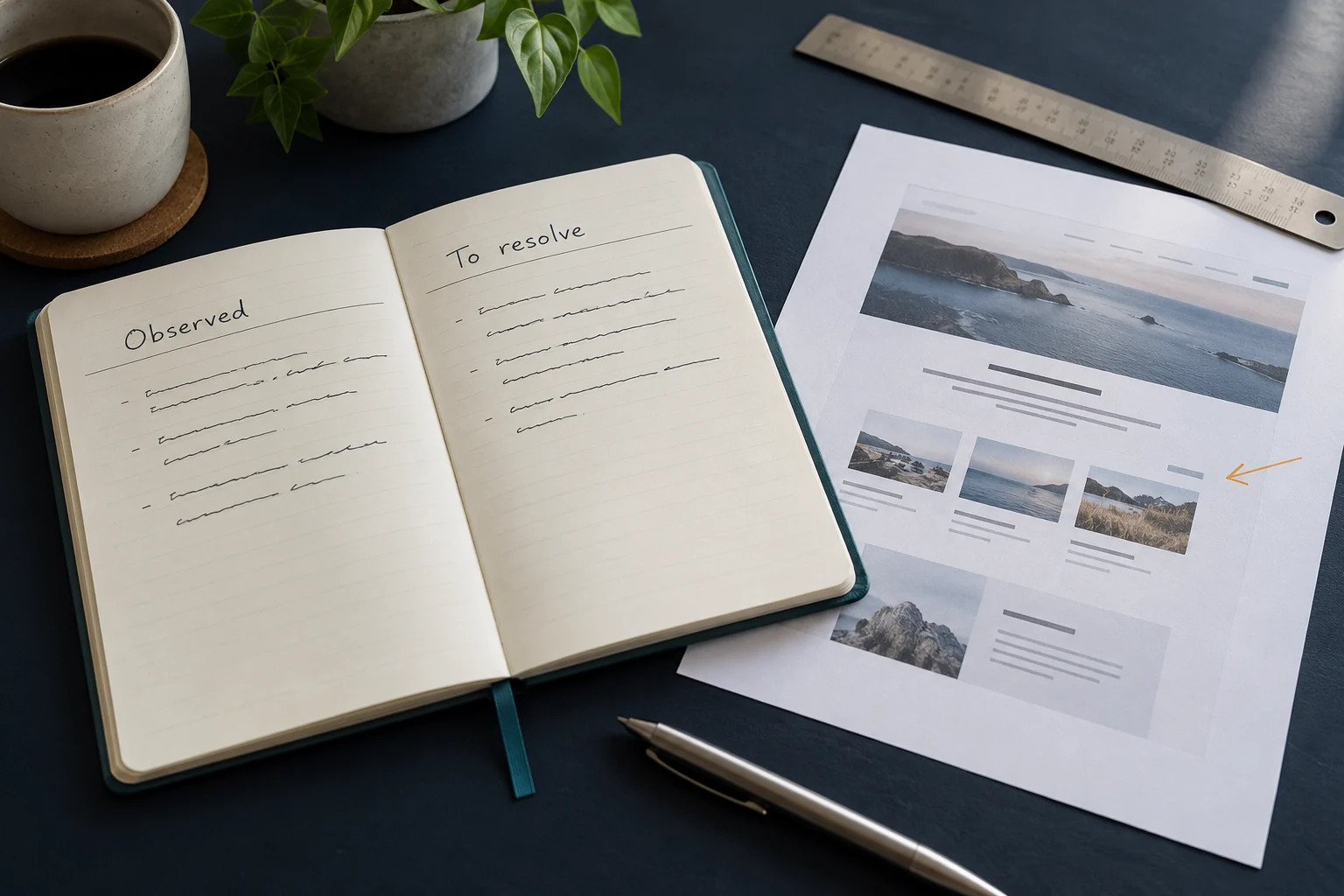
An issue list is useful when it leads to a decision. We explain what was observed, why it matters and the next action within the agreed scope.
After a relevant change, the affected behaviour needs another look. The record should distinguish what was resolved, what still needs information and what was outside the review. That makes the handover more honest and easier to use.
- Describe the actual issue and the affected part of the experience.
- Agree the response and who is responsible for it.
- Record the relevant verification and any remaining limit.
Agree what review
means for the project.
The right questions make the scope more useful. A standards page explains an approach; the project record explains the checks and results that actually apply.
How is testing coverage agreed?
The scope identifies the pages, functionality and environments to be reviewed. The record should state what was actually checked and what remains, rather than implying every possible device or browser has been tested.
Does this promise a perfect accessibility or performance score?
No. The work includes the standards and checks agreed for the engagement. Measured performance, specialist accessibility evaluation or a formal compliance review needs a defined method and evidence. A general quality statement is not a certification.
What if we notice a problem during review?
Raise the specific page or action and describe what you expected. We discuss the finding, its relevance to the agreed scope and the appropriate next step. Changes and remaining decisions are recorded clearly.
Know what matters.
Know what was reviewed.
Tell us how the website needs to support your business and the requirements that matter to you. We can agree a practical scope and a review you can understand.